From a DGX Spark to enterprise AI compute. Connect Qwen, GLM and DeepSeek with business knowledge and AI assistants, keeping data and models in an environment you control.
Private Deployment 本地部署◆NVIDIA Systems 設備採購◆Flexible Compute 主機租賃◆Knowledge Base 企業知識庫◆Proof of Concept POC 驗證◆Private Network Design 內網方案◆Private Deployment 本地部署◆NVIDIA Systems 設備採購◆Flexible Compute 主機租賃◆Knowledge Base 企業知識庫◆Proof of Concept POC 驗證◆Private Network Design 內網方案◆
Private Deployment 本地部署◆NVIDIA Systems 設備採購◆Flexible Compute 主機租賃◆Knowledge Base 企業知識庫◆Proof of Concept POC 驗證◆Private Network Design 內網方案◆Private Deployment 本地部署◆NVIDIA Systems 設備採購◆Flexible Compute 主機租賃◆Knowledge Base 企業知識庫◆Proof of Concept POC 驗證◆Private Network Design 內網方案◆
Parallel import edition
Limited stock
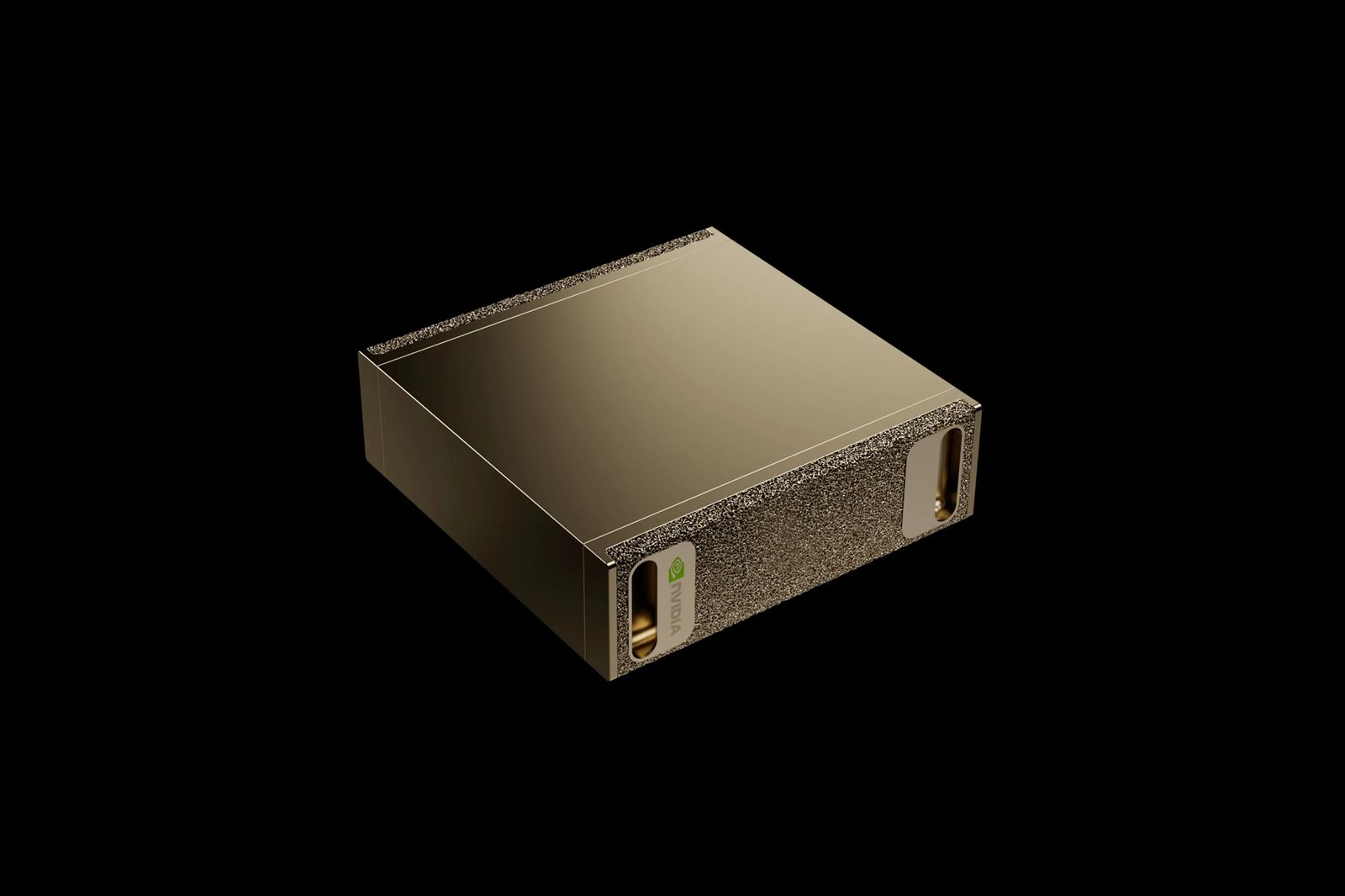
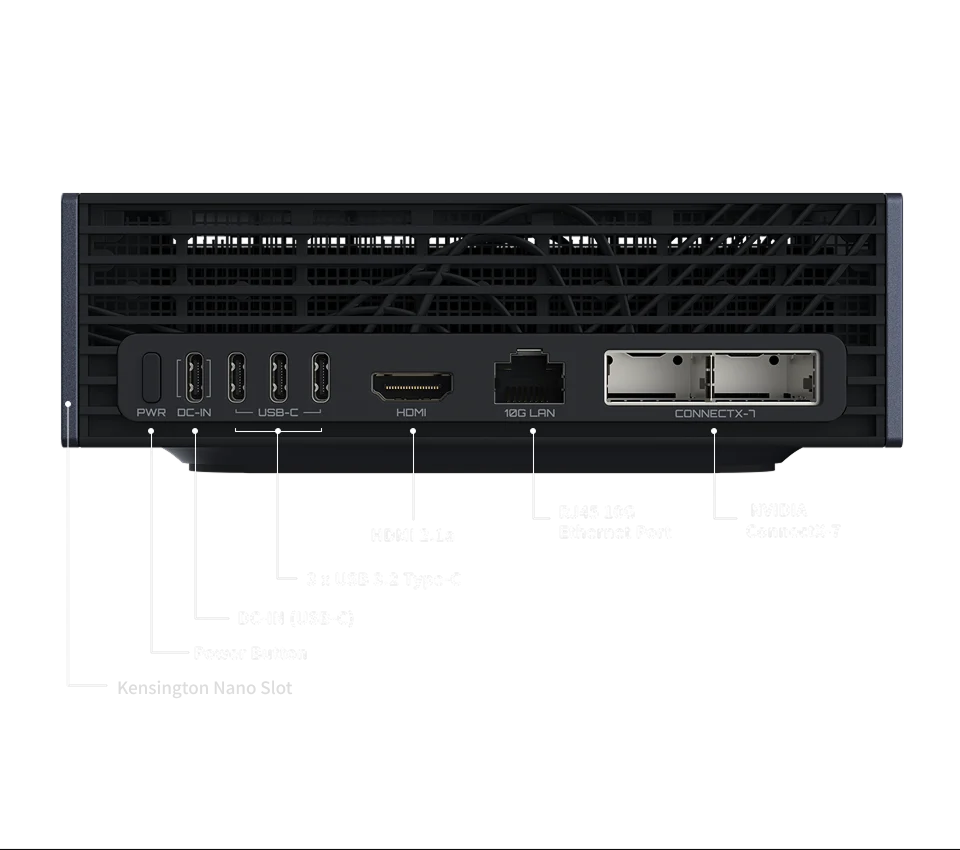
GIGABYTE AI TOP ATOM
HK$49,800/ unit (HKD)
Purchased in mainland China and currently located there.
Delivery
Delivery arrangements and timing are confirmed before purchase.
Warranty & after-sales
Warranty and after-sales arrangements are confirmed before purchase.
Per-unit confirmation
Each unit’s SKU, memory, SSD and packaging condition are confirmed before purchase. A formal equipment quotation and handover arrangements follow configuration confirmation.
The price is for hardware per unit. Model deployment, system integration and support services are quoted separately.
Not a product catalogue — a set of choices that fits the enterprise.
Sunrise Origin AI Lab — Enterprise AI Infrastructure
Private Deployment01 / 03
Keep models, data and permissions inside an environment the enterprise controls — from internal knowledge bases to dedicated AI assistants, rolled out step by step.
Data & permissions stay inside
Internal knowledge base / RAG
Dedicated AI assistants
Phased rollout by team
Compute / Selected for Purpose02
Three scales. One deployment logic.
From desktop AI supercomputers to multi-GPU servers, we assemble the right compute mix around your models, data and deployment boundary.
NVIDIA DGX Spark: Local inference, prototyping and department-level AI workflows.
Desktop AI
FIG.01 — DESKTOP AI NODENVIDIA DGX Spark
AI Performance
1 PFLOP
up to FP4 · sparsity conditions apply
Unified Memory
128 GB
coherent unified memory
Processor
GB10
Grace Blackwell Superchip
Storage
4 TB
self-encrypting NVMe M.2
Networking
ConnectX-7
Smart NIC
Form Factor
150 mm
150 × 150 × 50.5 mm desktop
Local inference, prototyping and department-level AI workflows.
Official NVIDIA specifications. Real-world speed, concurrency and usable context depend on the model, precision, quantization, inference framework and workload.
DGX Spark / From Compute to Work
A Spark on your desk. An AI workspace for your business.
Connect local models, business knowledge and dedicated assistants into a practical workflow. Sunrise Origin AI Lab starts with your documents and use cases, selects a Spark configuration, and tests the scope before delivery.
NVIDIA DGX Spark · 128 GB configurationGB10 Grace Blackwell · 128 GB unified memory per system
DGX Spark enterprise deployment
Confirm the scope around your workload
This section describes enterprise deployment services. Hardware configuration, availability and delivery timing are confirmed for each proposal; deployment and support services are quoted separately. For the GIGABYTE AI TOP ATOM offer, see the hardware enquiry offer above.
Local deployment support for the latest MoE models.
Support for GLM-5.3-Flash, Qwen, DeepSeek and other latest MoE model families, from model selection and quantization to inference and application integration. Match single, dual or multi-node systems to model capacity and your workload.
MoE activates only part of the expert network per operation, but full model weights still need memory planning. Supported versions, context, concurrency and delivery configuration are confirmed before deployment.
Leading model intelligence. In your business environment.
From office collaboration and complex reasoning to software engineering, Qwen3.8-Flash-Next brings richer task capabilities to local AI. We connect DGX Spark inference, business knowledge and dedicated assistants to your workflow.
Rankings checked 2026-10-08. AA is an independent model-level assessment focused on English text. The Hugging Face board includes community-submitted evaluations.
See intelligence through real tasks.
5 models in Qwen’s official comparison table · Higher is better
01
Qwen3.8-Flash-Next
73.9
02
Qwen3.8-27B
70.7
03
Claude-Opus-4.6 (Max)
68.2
04
Qwen3.7-Plus
65.1
05
DeepSeek-V4-Flash-0731
45.1
Ranks are calculated from Qwen’s published comparison. CoWorkBench is Qwen’s own office benchmark. SWE-bench Pro uses revised tasks; Claude scores cite its published results. See the source for model-specific settings.
Choose by task: Qwen reports HLE 35.9 versus Claude’s 40.0, and NL2Repo 48.1 versus DeepSeek’s 54.2.
Model intelligence × local delivery
↗Dual-Spark configuration and quantized inference assessment
↗Business retrieval, citations and dedicated assistants
↗Quality, context and concurrency tested with your business samples
Public benchmarks describe model capabilities. Local quantized results depend on weights, inference framework and business tests. These scores are not our Spark measurements.
From one local assistant to a four-node MoE cluster.
Start with the MIA public deployment catalogue. Match tasks, model memory and expected users to local Qwen, GLM and DeepSeek configurations, then validate with your own documents.
These are MIA/community configurations and measurements. Sunrise Origin has not reproduced them under identical conditions. Quantization, context, concurrency and hardware affect speed; delivery is validated against the customer workload.
1 × DGX Spark128 GB aggregate physical
Qwen3.8 Flash Next
INT4-AR · TensorFold · MTP
A single-node starting point for team knowledge assistants, documents and coding.
Configured context / tokens
262,144
Published single stream / tok/s
64.4
8-stream aggregate generation / tok/s
200.9sum of all streams
Configuration and delivery conditions
Startup needs roughly 92 GiB free memory and 160 GB disk. This variant reduces active experts and uses healing training; assess the speed–quality tradeoff. Context and concurrent requests share KV capacity.
Evaluate shared team services, long documents and multi-step development workflows.
Configured context / tokens
1,048,576
Published single stream / tok/s
67.4
16-stream aggregate generation / tok/s
390.1sum of all streams
Configuration and delivery conditions
CX7 direct link; roughly 102 GiB free memory per node. YaRN extends the window to 1M, with about 3.9M shared KV capacity. The 16-stream result does not mean sixteen full 1M windows at once.
Evaluate long enterprise documents, research material and local knowledge work.
Configured context / tokens
1,000,000
Published single stream / tok/s
Validate after licensing
Configuration and delivery conditions
Native 1M window; CX7 direct link, roughly 110 GiB free memory per node and 2.9M shared KV. Published accelerated measurements use DFlash2 under CC BY-NC-ND 4.0. Commercial delivery needs suitable licensing or separate MTP validation.
A four-node evaluation path for large MoE inference and academic research.
Configured context / tokens
1,000,000
Published single stream / tok/s
87.7
16-stream aggregate generation / tok/s
342.7sum of all streams
Configuration and delivery conditions
Switched 200 GbE RoCE, distributed sharding and NVMe Engram. About 476 GiB of weights plus around 48 GiB of Engram shards per node. A roughly 1M-token needle test passed; validate each long-document task separately.
The four-node GLM 5.3 Flash vLLM recipe remains experimental, with no published four-node speed or context measurements. Its current README points to the newer two-node TensorFold recipe. View original recipe ↗
Published Qwen and DeepSeek generation speeds use thinking-off tests. Context windows are configuration limits; usable context depends on shared KV capacity. Single-stream and aggregate throughput measure different things. Four nodes provide 512 GB aggregate physical memory, requiring distributed model sharding.
Organise text from PDF, Word, TXT and Excel files into a searchable knowledge base. Ask questions in natural language and follow the cited sources to check the answer.
·Find internal policies and product information
·Compare information across documents
·Draft answers and summaries with sources
Bring
Text-based PDF, DOCX, TXT and XLSX
Work towards
Retrieved passages, citations and draft answers
Scanned-document OCR, complex table interpretation and existing-system integrations are assessed separately.
Choose a starting point for your workload.
Memory figures total the physical capacity of 128 GB systems. Multiple nodes need a supported network topology and distributed software. More capacity does not imply proportional speed or user capacity.
Take your requirements to the next step.
Choose a use case and configuration, then add how you plan to use it. We will assemble an editable consultation email draft.
Your requirements
Business knowledge · 1 × Spark
Private deployment / Everyday chat and document retrieval
What to validate for this starting point
Start by checking model quality, retrieval accuracy and the everyday user experience.
Use your real documents and model to check answer quality, citations, context and concurrency requirements.
Private deployment does not end with one machine. Design each tier around data boundaries, models and software compatibility, targeting local processing and expanding as business value is proven.
L2 / Dual-Node LinkEach system has 128 GB unified memory. ConnectX-7 and distributed software enable exploration of ~400B-class models; validate the link, quantization, context and performance.
128 GB
Unified memory per DGX Spark
~400 B
Dual-node model guide · suitable quantization
200 Gb/s
Port specification · cable-dependent
1.4 TB
HBM3e per DGX B200 system
Example / Local AI Workflow
Workflow example · illustrative content, not live model output
Source-backed answers for team review.
For example, an employee asks which approvals equipment maintenance requires. The assistant retrieves authorized internal policies, outlines the steps and cites document names and passages. The employee can check the original source before taking the next step.
01
Data and access
Prepare business documents and confirm scope and access permissions.
02
Model and retrieval
Local inference combines relevant passages into a cited draft answer.
03
Review and use
People check the sources and content before using the answer in their workflow.
Why Local / EvidenceTBL. 02
Local cluster vs. public-cloud API.
Do the math first, then the architecture. These are structural differences at the architecture level — not a per-call price comparison.
DimensionLocal ClusterPublic-Cloud API
Data flowLocal inference; review external tools separatelyLeaves your domain via third-party infrastructure
Cost curveAccount for hardware, power, maintenance and supportPer-token billing, growing linearly with usage
LatencyMeasure the model, context and concurrencyFluctuates with public routing and rate limits
Model controlYou lock version, precision, quantizationVendor sets update and deprecation cadence
ComplianceSupports residency goals; assess requirements individuallyCross-border and residency reviewed case by case
Scale pathNode → dual → row, incremental on demandInstantly elastic, but cost compounds over time
Parameter scale and interconnect bandwidth are official NVIDIA specifications; cluster throughput, concurrency and real-world latency depend on model, precision and workload, and are verified by POC before delivery.
Model Deployment Matrix04
Different models need different compute boundaries.
The tiers below are Sunrise Origin AI Lab's solution classification, not a fixed performance guarantee. Before delivery we verify model version, precision, context, concurrency and data-security requirements.
Model FamilyOfficial ScaleSuggested Tier
Compute Boundary02 / 08
DesktopWorkstationMulti-GPUCluster
Model Scale
125B backbone / 6B active + 51B embedding
Typical Scenarios
Business assistantsCodingKnowledge base
Verified before delivery
Model version · precision · context · concurrency · data security
Match the latest MoE models to capacity, quantization and framework support. Full GLM-5.3-Flash, DeepSeek-V4.1-Flash and Kimi K2.5 require suitable dual-node, multi-node or enterprise compute configurations, confirmed by testing.
From Requirement to Operation05
A system begins at the enterprise boundary.
01 / DEFINE
Define the boundary
Understand data, models, compute, headcount and security requirements.
02 / BUILD
Build the plan
Choose the right mix of procurement, deployment or leasing — and complete a POC.
03 / OPERATE
Operate continuously
Deliver, then monitor, update and support as needed.
Private Consultation06
Let's talk about where AI should stay.
No full specification needed to start. Begin with one business scenario, one class of data, or one model.